How ChatGPT Became Our Cognitive Sidekick
We haven’t just built smarter tools. We’ve gained a new kind of mind.
For centuries, tools have shaped our bodies — wheels, engines, machines. But now, we’re building tools that shape our minds. Large language models like ChatGPT aren’t just technology; they’re becoming a second brain.
There are moments in history when a new technology quietly enters our lives, only to transform everything in hindsight. The internet, the smartphone, and the search engine are familiar examples. In the last couple of years, we’ve crossed into another such moment: the age of large language models (LLMs).
If you've ever marveled at the eerily human-like responses of a chatbot, you've already had a glimpse of their power. But trust me, what we're seeing is just the tip of the iceberg. For me, what started as a simple curiosity has become an indispensable part of my daily routine—a true extension of my own mind. Whether you're a student, a professional, or just a curious mind, these tools have something to offer.
From Queries to Companions: A New Kind of Interaction
When search engines arrived, they made the world’s knowledge instantly accessible. You would type a query and get a list of links. It was revolutionary, but the response was largely impersonal and static.
LLMs are a different beast altogether.

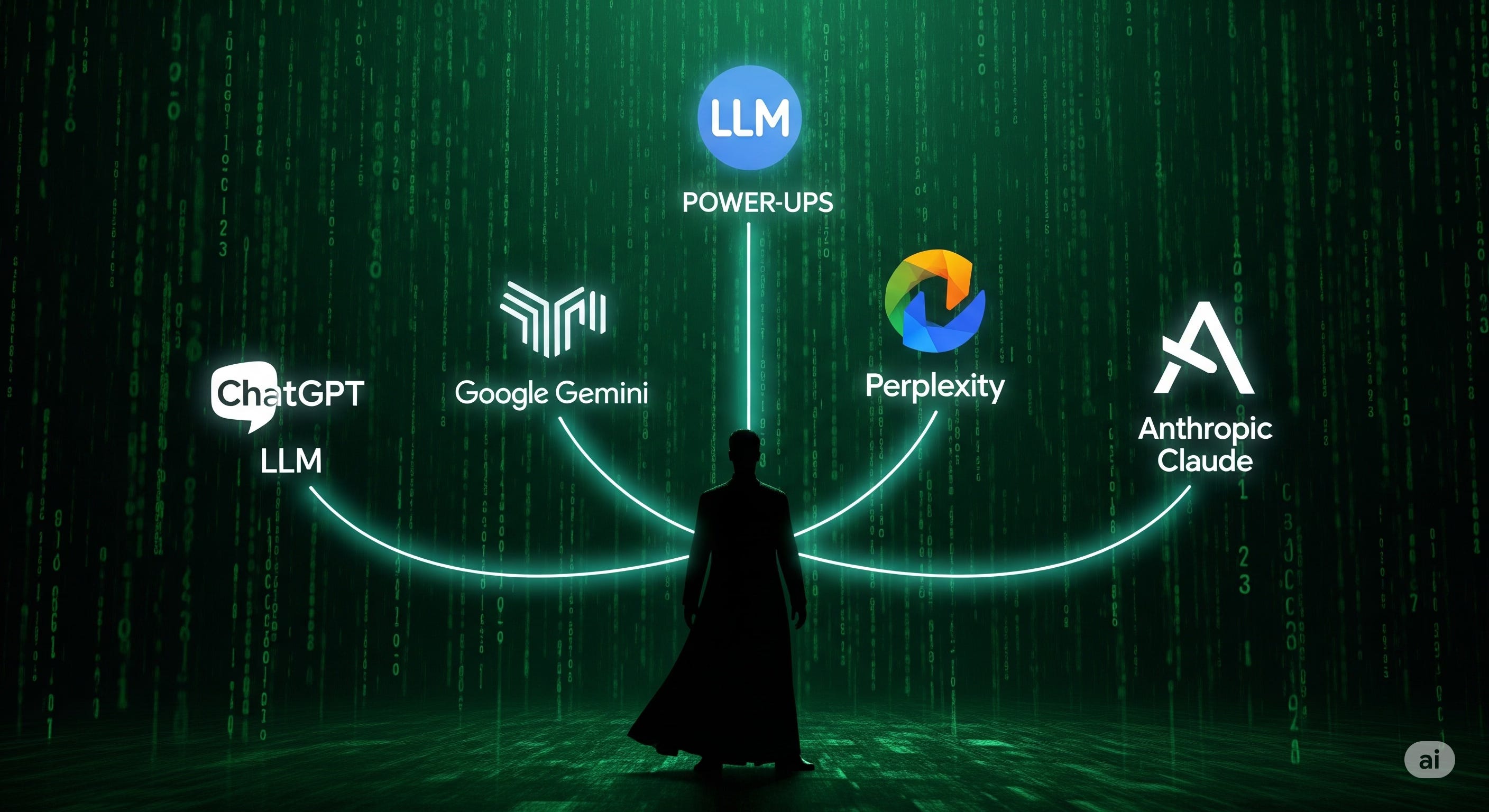
Today, when I use an LLM—be it ChatGPT, Google Gemini, or Perplexity—it doesn’t just retrieve answers. It responds in a way that often feels tailored to me—to my phrasing, my intent, and even my mood. The output varies not just by the question, but by how you ask it. It’s no longer just a search tool; it's a second brain.
Like Neo in The Matrix: Your Mind on Power-Up
Remember Neo in The Matrix, plugging in and instantly learning kung fu? Using an LLM sometimes feels like that—like we've all been given a superpower, a mental upgrade on the fly. From planning weekend getaways to comparing tickets, they've genuinely improved my efficiency and effectiveness.
Here are just a few of the "power-ups" I find myself using constantly:
Research on Steroids: Take my recent search for an air fryer. Instead of spending hours sifting through reviews and health blogs, I asked an LLM to compare the top models based on my needs and summarize any potential health concerns. I got a clear, easy-to-digest report in seconds, making the decision simple and effective.
Learning at Ludicrous Speed: Curious about quantum computing? An LLM can explain complex topics in simple terms, answer follow-up questions, and even quiz me to make sure I'm grasping the concepts.
The Ultimate Writing Partner: From drafting a tricky email to brainstorming creative ideas for a story, LLMs are phenomenal writing assistants. They can help with tone, grammar, and even writer's block.
The Art of the Prompt: A Mirror to Your Mind
What’s fascinating is how deeply personal this interaction can be. The power of an LLM isn’t just in the model itself, but in how we wield it. A vague or uninspired prompt will likely yield a generic response. But a well-crafted, thoughtful prompt can unlock truly insightful and creative answers.
In that sense, using an LLM is a form of active self-reflection. It's a constant reminder that the quality of our thinking and our ability to articulate our thoughts are paramount. It mirrors us.
My Go-To Chatbots: The Right Tool for the Job
With a growing number of LLM-powered chatbots available, it can be overwhelming to know where to start. Here's my personal lineup and what I use each for:
ChatGPT (OpenAI): My top choice for creative writing, drafting, and nuanced ideation. I use the free plan but the Pro plan unlocks GPT-4o, which would like a true assistant.
Perplexity AI: When it comes to research and comparisons, Perplexity is my go-to. It excels at providing up-to-date information and cites its sources, which is a huge plus.
Google Gemini: An excellent all-rounder, particularly for brainstorming and integrating with Google's ecosystem (Gmail, Docs). If you have a Google One subscription, you likely already have access.
Final Thoughts: We've Gained a New Kind of Mind
This isn’t just about getting things done faster. It’s about thinking more freely. LLMs lower the barrier between idea and execution, between question and insight. They can’t replace human depth, but they can help unlock it.
And that, I believe, is the quiet revolution we’re living through. We haven’t just built smarter tools; we’ve gained a new kind of mind.
Do you see AI as an extension of your mind — or a replacement for it? Reply and share how you’ve felt your own thinking change since using these tools.