How a Netflix Movie introduced me to 200 year old Romantics
My Oxford Year and John Keats
The Spark
We’re often told to fight for more time, to extend the clock at all costs. But what if the real art of living lies not in its length, but in its depth? I found a powerful answer to this on a quiet London night, absorbed in the film: ‘My Oxford Year.’ In a poignant scene, a gift was given with a handwritten note bearing just two lines from the poet John Keats:
"Stop and consider! Life is but a day; A fragile dew-drop on its perilous way."
In a story about choosing love over a longer life spent in a hospital, the words landed with the force of a physical impact. It felt like a radical invitation from 200 years in the past: to embrace the beautiful, fleeting nature of life rather than simply rage against it. That single moment sparked a journey into the world of Keats and the Romantics, revealing a practical philosophy for our anxious times—a way to find the most profound truths hiding in simple moments of beauty.
The Poet
So, who was this poet who could reach across two centuries with such clarity? John Keats wasn't a wealthy aristocrat with time on his hands; he was the son of a stable-keeper, a young man who trained to be a surgeon. His decision to abandon a stable career in medicine for the uncertain life of a poet was a profound statement in itself. He chose beauty over certainty, art over science.
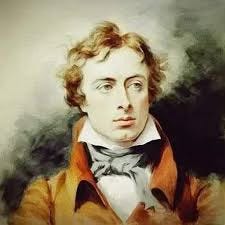
This choice placed him squarely within the Romantic movement, a powerful artistic and intellectual wave that swept across Europe from roughly the 1780s to the mid-1800s. It was a direct rebellion against the cool logic of the preceding Age of Enlightenment. Fueled by the revolutionary spirit of the age—particularly the ideals of the French Revolution (1789)—and as a reaction against the dehumanizing smoke of the Industrial Revolution, the Romantics looked for truth in a different place. Poets like William Wordsworth, Lord Byron, and Keats himself championed intense emotion, the spiritual power of nature, and the beauty of the imperfect and fleeting.
A Philosophy
His life was steeped in loss. He nursed both his mother and his brother as they died from tuberculosis, the same disease that he knew was consuming him. With this shadow constantly over him, his poetry became an urgent, desperate search for meaning. He found it not by looking away from suffering, but by looking so intently at the world that he discovered two profound truths.
First, he developed his superpower, an idea he called Negative Capability: the ability to embrace "uncertainties, mysteries, doubts, without any irritable reaching after fact & reason." He didn't need a cure or a grand explanation for his pain.
Second, he found the ultimate answer in beauty itself. In his famous "Ode on a Grecian Urn," he concludes with the immortal lines:
'Beauty is truth, truth beauty,'—that is all; Ye know on earth, and all ye need to know.
For Keats, a moment of profound beauty—whether in art, nature, or a memory—contained a timeless truth that outlasted suffering. The beauty of a nightingale's song or a Grecian urn was his proof that something permanent and meaningful existed. His own life was the "fragile dew-drop," and he chose to marvel at its delicate beauty rather than curse its briefness.
An Invitation
Learning all this felt like more than a history lesson; it felt like being handed a new lens to look at the world. To be honest, before this journey started, I wasn't much into poetry. It often felt like a locked room, something for academics in dusty libraries. But I now realise I was missing the point.
The Romantics, and Keats in particular, weren't asking us to just read poems; they were inviting us to adopt a mindset. In a world that constantly yells "Hurry up!", their work is a quiet but firm whisper to "stop and consider." Discovering this has given me a new appreciation not just for poetry, but for the very act of paying attention. It’s a reminder that my own feelings, my connection to the world around me, and the moments of beauty I might stumble upon are not trivial distractions—they are the very fabric of a life fully lived.
This article/post is the start of a journey, and it’s an invitation—for me and for you. An invitation to perhaps read a poem now and then, not as a chore, but as an act of seeing. To value the "fragile dew-drop" of our own daily experience. I started with a single quote from a movie, and it has opened a door to a richer way of seeing the world. And that, I'm learning, is a truth as beautiful as any poem.